Growing Home: reclaiming the earth beneath the concrete.

rooftop garden atop the Gary Comer Youth Center, 71st and South Chicago

I’m itching for spring. Here in Chicago, the weather has been mercifully mild… Visions of a vegetable and herb garden in my backyard dance in my head. I am swooning over Kale and Basil!

But dreams of building up my South Side neighborhood (through green jobs, better food, and economic empowerment) dance, too. I’m a big supporter of localism and building up every community in Chicago with all the resources needed to support a healthy lifestyle. More importantly, though, I think that living a so-called green life shouldn’t be reserved for the rich. I also think we should all be able to access fresh spinach as readily as a flaming hot cheese puff. I’m glad I’m not the only one.

Growing Home Wood St. Farm, Aug. 2010. Photo by Andrew Collings

Check out this video featuring local Green Activist Orrin Williams of Growing Home and the Center for Urban Transformation; just two of many Urban Agriculture initiatives here in Chicago. Their goals are varied and yet unified: providing green jobs and supplying wholesome food for the community.  Orrin is a friend of Darkjive (and a friend of the South Side). Jive on!


More and More: Little Milton’s plea for more as the cost of living was skyrocketing.

Whew. That was a long blogpost title, huh? I know. But, let me explain:

In late 1967, Chess Records’ Checker subsidiary released this record entitled “More and More” by Little Milton, where the chorus sings and growls:

“More and More… all the time!”

Ironically, the flip is a meandering soulful blues cut called “The Cost of Living”. So, maybe the editorial statement of the release was:

“The Cost of Living” is “More and More”!

Or, maybe, on a more hopeful note:

With “The Cost of Living” growing “More and More”… find More with Less!

Either way, it’s a beautifully grooving little record by Little Milton in the vein of all his grooving blues-soul hybrids cut here in Chicago in the late 1960s (my favorites being “Drifting Drifter”, “Blind Man”, “Don’t Leave Her”, “Poor Man”, and more). It also just happens to make me pretty happy.

James (“Little”) Milton Campbell, Jr. recorded most of his best known material here in Chicago, but he hailed from St. Louis. In addition to growling soulful vocals, he also played blues guitar. Oh yes, and he wasn’t particularly little.


Sonic Healing Ministries’ Free Jazz Jam

This Sunday Afternoon 2p-4pm, it’s a Free Jazz Jam in the Chatham section of Chicago. 7534 South Eberhart (home of Sonic Healing Ministries) is the place. David Boykin (saxophone, et al) and the Microcosmic Sound Orchestra host. DJ Ayana spins. The Free Jazz services will also be streaming live here.

About Sonic Healing Ministries:

Everything in existence on the physical plane, all energy/matter, vibrates at a particular frequency that defines it.

Love is the force that harmonizes this myriad of frequencies and binds everything together into a functioning whole.

Creative music, spiritual jazz, free jazz, avant garde jazz, experimental music, improvised music, etc., is a sonic representation of this love.  It is a unified expression and celebration of each individuated experience of creation simultaneously.  It is a reverberation of the macrocosmic sound.


‘The Listening Room’ At Seattle Art Museum

Reblogged from Ayana Contreras is Living Breathing Radio:

Click to visit the original post

‘The Listening Room’ At Seattle Art Museum. Marcie Sillman 12/15/2011 Art museums are dignified repositories for cultural artifacts, right? A new show at the Seattle Art Museum questions that assumption, and slips in a little R&B at the same time. KUOW’s Marcie Sillman reports. ***** It’s a chilly Sunday morning. The Seattle Art Museum, SAM, has been open for an hour or so, but people are just starting to trickle in. Things are pretty quiet until you take the escalator up to the second floor. Marcie …

click here to hear the original radio piece.

Mahogany (1975): Cult Movie of the Week

Sometimes a post idea for Darkjive happens organically: the intersection of various occurrences in my life make it clear that I MUST post about something in particular.

In this case, “Mahogany” started out as a request from a reader who thought that, because it was primarily shot here in Chicago, the lack of a post was a glaring omission on my part.

Additionally, a certain co-worker has referred to me as Miss Ross (a Mahogany reference) for years, because of my borderline-theatrical vintage fashion sense.

I also just recently got past my disdain for the “Theme from Mahogany” so that I could view the film for the first time in its entirety. Alas, the time has come…

Ultimately, this is a cult movie in the truest sense of the word. Watch it for the fashion, for the shots of Chicago in the 70s, for the classic rags to riches tale… or even simply for the dialogue. “Mahogany” is the story of Tracy, a shop girl from Bronzeville who takes classes at a Fashion Design school at night and dreams of making it as a designer… even as she climbs the ladder of success as an unlikely model. Starring Diana Ross and Billy Dee Williams, it’s also a sadly flawed tale of conflicting motivations and hard-won love.

A wonderful taste of “Making It” seventies-style… but at what cost? Losing love? Identity? Or maybe, can she have it all?

This slideshow requires JavaScript.


DJ Ayana and Simeon Viltz spin… and it’ll be a Groovy Situation

Dancefloor of Chicago Club, Michael Abramson (circa 1970s)

THIS Thursday, January 19, 2012. 10:00pm at Morseland. It’ll be a groovy situation laid down on wax. All Soul Lovers. No Cover. I’m ready, are you?

Above, partake in the Jones Girls singing “I Need You”. Before they found their fortunes in Philadelphia with classics like “Nights Over Egypt” and “Who Can I Run To”, the Detroit natives were getting down in Chicago with some killer cuts like 1973′s “I Need You”… just a sampling of what I’ll spin (as DJ Ayana) on Thursday. Rarities, Vintage Local Gems, Bluesy Groovers, and Jazzy Madness will abound.

The Groove Conspiracy (Simeon Viltz and Ayana Contreras)

Morseland / 1218 West Morse

Chicago, IL

10pm til 1pm


Opportunity Please Knock Chorus: oscar brown, jr.’s collaboration with the blackstone rangers

In 1967, members of the Blackstone Rangers, a notorious Gang in Chicago, collaborated with singer/composer/playwright/activist Oscar Brown Jr. to create a Musical Revue called “Opportunity Please Knock”. About eight thousand people went to the show during the first weeks of performance (at Chicago’s First Presbyterian Church). Photos in this post are from that first run. The show gave exposure to various teens that had ample talent, but little opportunity.

Oscar Brown Jr., said in a 1996 interview with Rick Wojcik:

I made contact with the Blackstone Rangers, and we began talkin’ to them about some alternative activity to what they were doin’, which was basically gang-bangin’ and terrorizing the neighborhood… The fact that there was this gang presence was bad for business and that’s one of the reasons that I contacted gangs- could we do something for them that would stop them from steppin’ on my hustle! I said we’d do a show for ‘em, but they said, “well, we got some talent, can we be in the show?” We wound up doin’ a show called Opportunity, Please Knock, which really changed my life, basically, because it let me see that there was this enormous talent in the black community. This is where all the dances came from; this is where all the popular music comes from; so I began to really concentrate on that. Opportunity Please Knock ran for a little while, with those kids being on the Smothers Brothers Comedy Hour.

The gang’s involvement seems to counter the completely negative impact that most people assume gangs have on communities. The contradiction was  fleshed out in a 1969 article published in “The Alantic”:

Since the emergence of the Ranger Nation, individual members have been charged with murder, robbery, rape, knifings, extortion of South Side merchants, traffic in narcotics, extortion and intimidation of young children, forced gang membership, and a general history of outright violence, especially against the Disciples who never joined the Rangers. On the other hand, the Ranger Nation has been credited with keeping the South Side of Chicago “cool” during the summer of 1967 and the spring of 1968, following the assassination of Dr. Martin Luther King. It has been said that they have kept drugs, alcoholics, prostitutes, and whites hunting for prostitutes out of their neighborhoods. They have also been credited with making genuine attempts to form lasting peace treaties between themselves and the Disciples in order to decrease the level of gang fighting on the South Side. They have been alternately praised and condemned by the national press, their community, the United States Senate, the local police, and Chicago youth organizations to such an extent that, if one depends on the news media for information, it is almost impossible to maintain a consistent opinion of the Blackstone Rangers.

James Alan McPherson, from “The Atlantic”, 1969

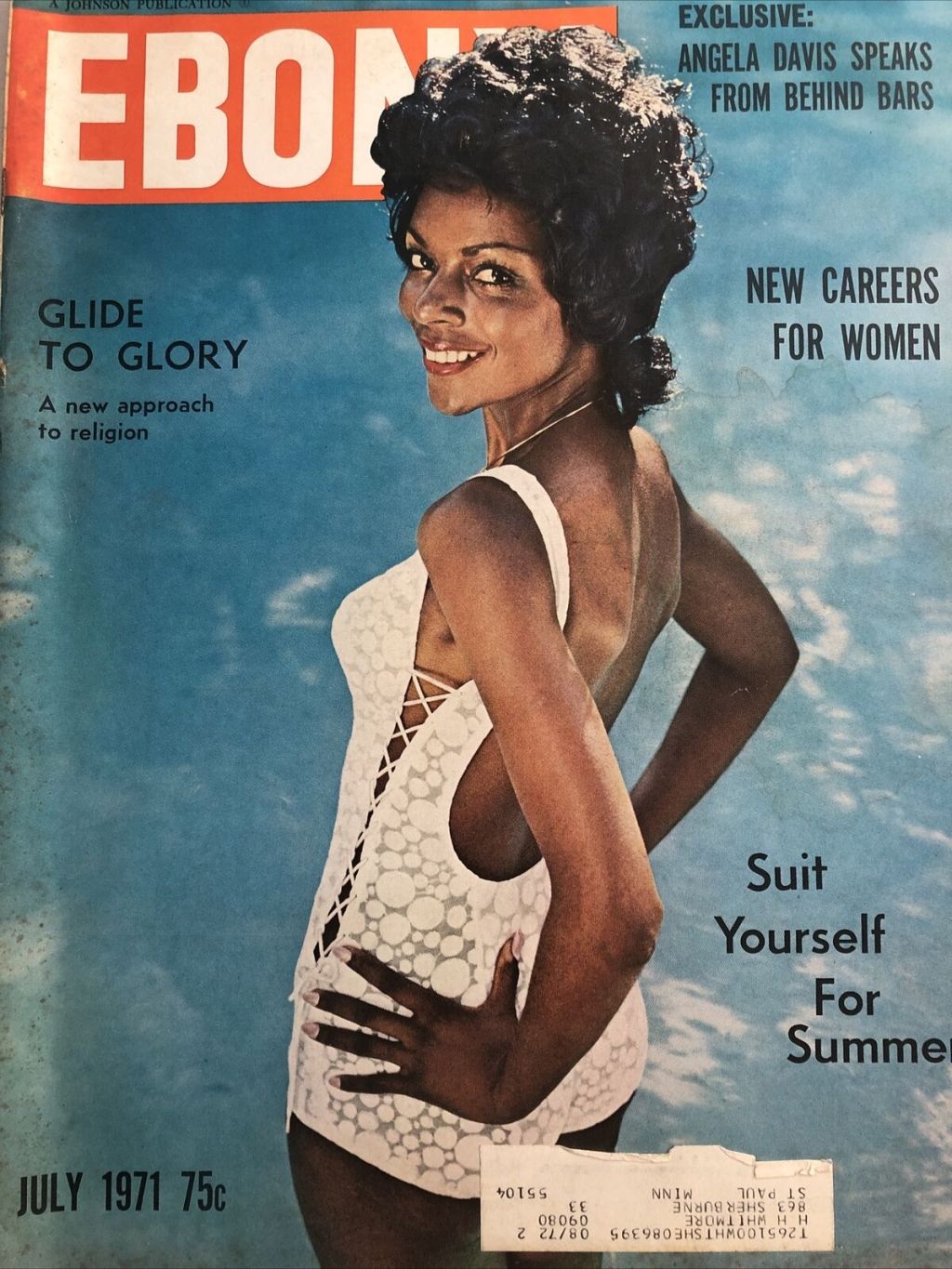
According to an August 1967 Ebony Magazine article about the Revue, Oscar Brown Jr. further stated:

These kids are angry because they’re being shot through the same grease their parents were shot through, and they understand that it’s impossible for a bootless man to pull himself up by his bootstraps. But they’re not too disillusioned to work hard-if they ever had and illusions at all. It is up to us to give them a better picture of reality.

Below is a record I found, released on Ramsey Lewis’ record label, called “All this Talk About Freedom” by the Opportunity Please Knock Chorus. It’s what led me to this story in the first place. It’s also the only audio documentation of this slice of Chicago History. It’s also pretty groovin’. Image below is of the Opportunity Please Knock Chorus.


Fontella Bass: sassy soulful siren in the first degree.

Fontella Bass is an amazing lady. Not only is the trajectory of her career fascinating, but she’s arguably the archetype for what Aretha Franklin was to become: a sassy, soulful siren in the first degree.

Ms. Bass comes from the St. Louis, and is a part of a group of St. Louis native vocalists that made their way in Chicago (this includes Chuck Bernard, Little Milton, and Bobby McClure). Her voice can be described as a salt-sweet contralto that is absolutely gorgeous, in my opinion.

She is best known for the HUGE hit “Rescue Me”, which is a Chicago-written, recorded,and produced slice of 60s Soul. Her greatest hit (which she also co-wrote), “Rescue Me” has been featured in movies, commercials, and TV shows galore; but it is also too often mistakenly attributed to Aretha Franklin. Ironically, at the time of its release, Aretha Franklin was singing jazzy pop standards, a’la young Dinah Washington. 

In fact, “Rescue Me” predates Aretha Franklin’s soulful breakthrough release “Never Loved a Man (The Way I Love You)” by a couple of years.

“Rescue Me” was released on Chess Records’ Checker imprint, after which Fontella continued to release soulful gems for the label (my favorites being “I Can’t Rest” and “Lucky in Love”) until 1968 or so.

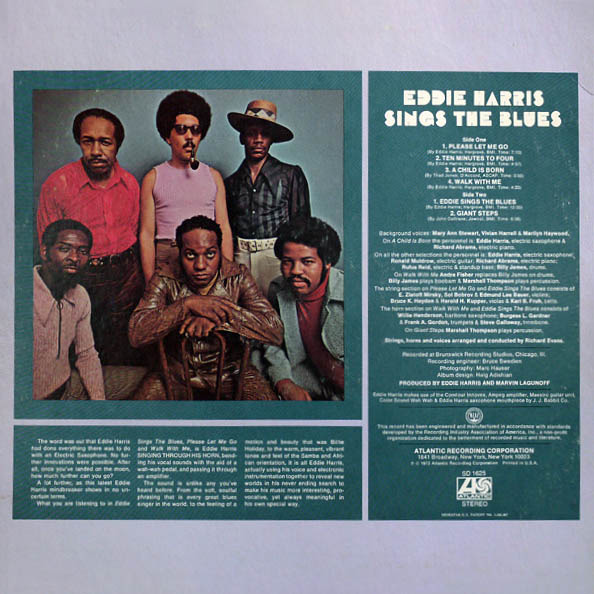
By 1970, in a plot twist worthy of an arthouse movie, Fontella Bass was married to musician Lester Bowie and had joined him as an expatriate in France in The Art Ensemble of Chicago. There, she served as the vocalist in the group: a seminal, Chicago-based free-jazz combo… I suspect that’s her in the white face paint in the far right corner of the album pictured below.

In 1990, she heard her own voice singing “Rescue Me” on an American Express commercial and was inspired to look into her rights, and wound up suing American Express and its ad agency. She won over $50,000 plus damages in a settlement. Awesome.

Enjoy Fontella Bass singing “Rescue Me” (while looking quite Chicago Mod in a houndstooth cap and jacket) on Shindig! in 1965.

…and, below, listen for some of her vocals on a righteous jazz workout from The Art Ensemble of Chicago. Jive on!


Wilbur Holmes: images of the West Side with Grit and Grace

photo by wilbur holmes, circa mid 1970s

Carlos of Surplus of Options (a smokin’ hot Antique/Resale shop full of curiosities here in Chicago) found these pictures… in fact, he picked up dozens of them… at a West Side Junk shop for almost nothing. I was immediately struck by the photos, both for their composition and tone. I bought the pictures from him with the promise that I’d share them with Darkjive readers.

All of the photos came from the same lot and are presumed to have been taken by one Wilbur Holmes (who apparently had a way with the ladies, based on the subject matter of many of his shots). A good number of his photos had West Side subject matter, such as the Garfield Conservatory and Malcolm X College. At first, the photographer was a mystery. Only one shot (not pictured here) had his name embossed in the corner.

A bit of research turned up that Mr. Holmes worked for the post office for 40 years (as well as being a self-employed photographer).

I found some of his shots published in Jet Magazine, during the 1970s (image below from the March 4, 1971 issue).

He was a First Lieutenant in the Army in World War II, and he died in 1991. If you know/knew Mr. Holmes and have more info, please share it here in the comments section. I’m so grateful that Darkjivers are so good at sharing…

This slideshow requires JavaScript.


Record Store: where you can’t buy anything, but you can listen to everything.

I’ll be spinning for the opening of this… The record store is completely modular and made to encourage the kind of listening-based cultural interchange that makes record stores awesome. Over 4,000 records on loan from community members’ collections. None of them are for sale, but visitors can listen to them all: from “Belly Dancing Favorites” to the Moody Blues to Earth, Wind, & Fire.

Record Store — an installation presented by Seattle Art Museum in collaboration with [storefront] Olson Kundig Architects (MacDowell architect Tom Kundig’s firm) — December 13th in Seattle! Attempting to remove the barrier between artist and audience, Record Store encourages the community to participate in the curation of this Olson Kundig Architects-designed traveling installation. Record Store is on view at Olson Kundig Architects (406 Occidental Ave., Seattle, WA 98104) from December 13 to January 31, 2012, Monday to Friday, 9 am to 5 pm. An opening event will be held on December 13, 2011 from 6:30 pm to 9:00 pm. Special DJ listening parties will take place during the installation’s run.


Follow

Get every new post delivered to your Inbox.