Chicago Blues
-
You’re Tuff Enough: junior wells’ new breed blues
The title cut off this 1968 album is a bluesy monster produced by Charles Stepney with more than enough groove to stay squarely in the pocket. Also on this album is the local hit “Up in Heah”, another blues-infused party track. Both of the records will make sceptics rethink the blues. According to the back…

-
Good Lovin… or else
This is a record that embodies Chicago Grit and Get Down. “Good Lovin” by the legendary Otis Clay is at once a love song and a warning. Take heed. Says he: “And if you walk out my life, I hope you fall and break your neck”. If that ain’t grit, I don’t know what is…. A favorite…
-
Light on the South Side Book Release
In the mid-’70s, photographer Michael Abramson set his viewfinder on the South Side of Chicago, specifically the many clubs and lounges that served as Hothouses of street fashion (among them, the legendary High Chaparral and the Showcase Lounge). They reflected where blues, soul and disco collided: a dream of grit and gold lamé. The resulting photos have been compiled into…
-
Howlin’ Wolf (covering Howlin’ Wolf)
“Evil”. A fundamental Howlin Wolf record, created here in Chicago, back in the 1950s. A platter of standard electrified Delta Blues. Now, add Marshall Chess (son of Chess Records’ Leonard Chess), the turbulent and psychedelic 1960s, and some of the best jazz, funk, and soul studio players in the city. Remake and enjoy. Well that’s not exactly…

-
Light: On the South Side…Grit and Gold Lamé
I, for one, have stared for more than a moment at the forgotten, peeled paint on the side of the 408 Club building over on 79th Street (just East of King Drive). In mid-seventies hipster font, the ad reads “Sheba Disco”, apparently some sort of disco club. I’ve wondered what manner of elephant bells and Quiana was to be found…
-
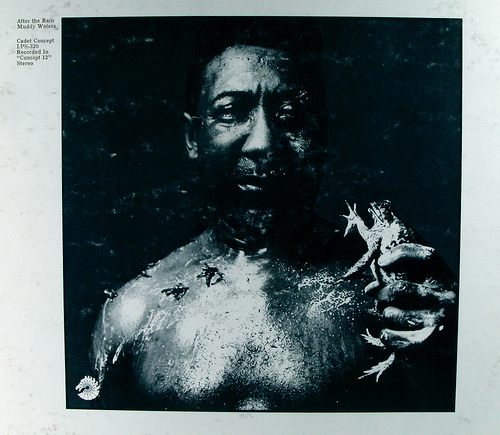
Electric Mud: Electrified Delta Blues got a New Jolt
(“Tom Cat” by Muddy Waters) The late sixties in Chicago was a wild time. The Democratic National Convention and the Riots in 1968 labeled us as unruly, Serial Killer Richard Speck in 1966 labeled us as unsafe, and Martin Luther King, Jr., (marching in North Lawndale for equal housing in 1966), labeled us as a…
-
Hi-Fi White: Foodstamps, Bulldogs, and Hollywood
Wilbur White was a nightclub singer on the South Side of Chicago whose bluesy growl wielded so much power that he was nicknamed Hi-Fi. He’d been in the clubs since the 1950s, and although I hear he put on a knockout of a show, that never translated into record sales. Speaking of knockouts, he…

-
Black Merda? Black Rock.
The year is 1969 on the South Side of Chicago (21st & Michigan). Marshall Chess (son of Leonard Chess), has taken the helm at Chess Records (the Seminal Chicago Blues/Jazz/Gospel label). A fairly hip young cat, Marshall realizes that the hottest acts in popular music at the time borrowed (or gangstered) heavily from the roster at…
 darkjive.com